When I got into this business, pocket listings were everywhere. Half the market was hidden, information was uneven, and the people with the most power were the brokers who controlled access, not the consumers who were actually buying and selling homes. Then the industry started to improve. More shared information. More transparency. More cooperation. Buyers could actually see what was available. Sellers could reach the full market. That was progress.
Now the industry is trying to reverse itself.
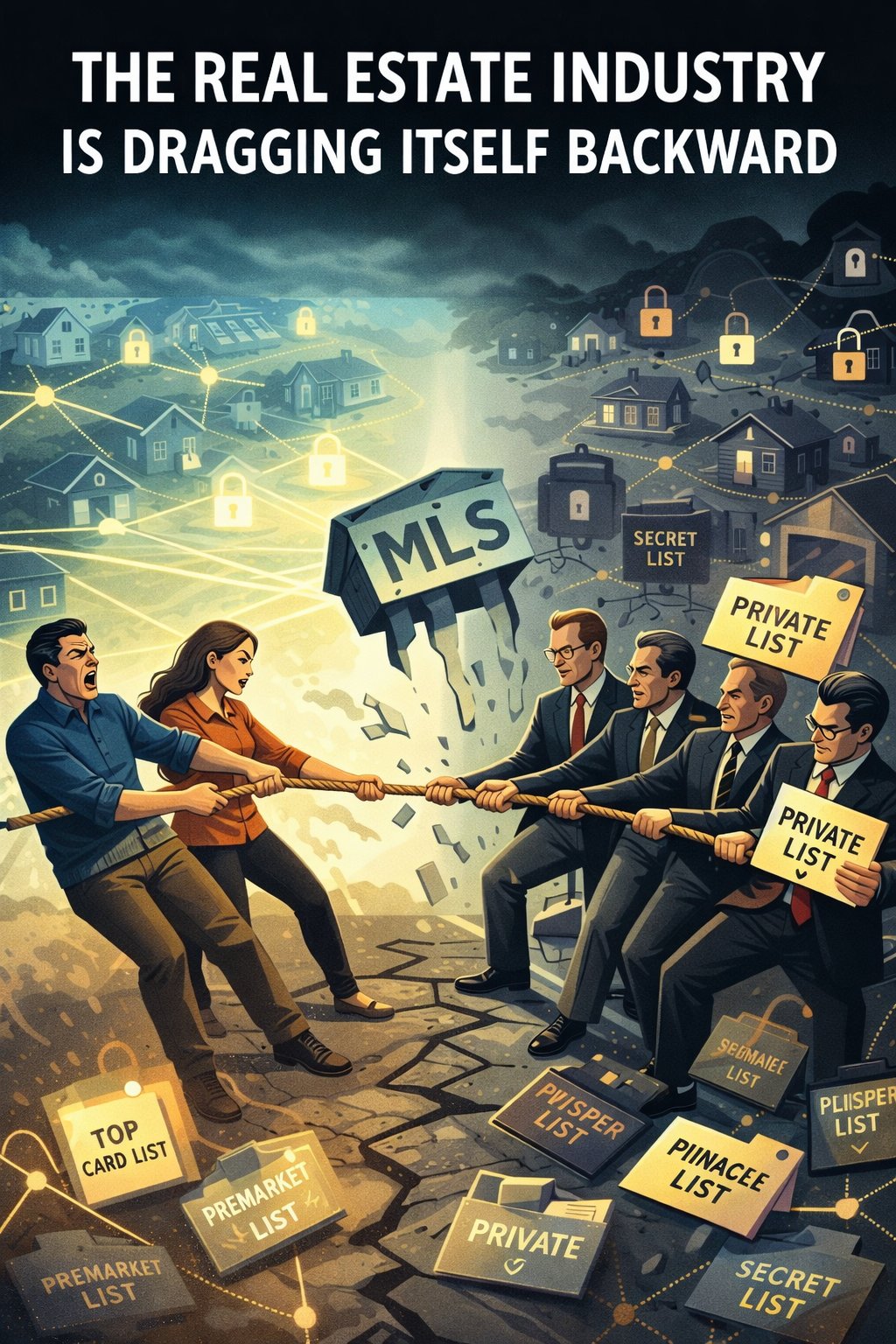
Every firm suddenly has its own version of a private network. Blacklist. Pinnacle list. Private list. Whisper list. Premarket list. Secret inventory. Some are in-house. Some are paid third-party platforms. Some are old Yahoo groups and private email chains dressed up with nicer branding. I know of 32 separate private or off-market listing platforms right now. When everybody has a secret list, nothing is special anymore. It is not innovation. It is just fragmentation.
And let’s stop pretending this is about helping consumers.
The sales pitch is always the same. “It creates exclusivity.” “It gives sellers more control.” “It incentivizes brokers to push the listing harder.” That last one is especially insulting. Incentivizes them how? To do what they were already supposed to do in the first place? The real incentive is obvious. Keep the listing in-house, keep the buyer in-house, and try to grab both sides of the commission. That’s the game. Always was.
The damage is real. Buyers cannot see all of their options, which means they cannot make fully informed decisions. They cannot track the actual market clearly, which means their understanding of value gets distorted. Sellers are often told they are getting some elite, tailored strategy, when in reality they may just be getting less exposure. Less exposure means fewer eyeballs, less competition, less price discovery, and a greater chance that somebody leaves money on the table. Even industry and consumer-facing groups that support transparency keep making the same point: broader access improves visibility, competition, and fairness, while private listing networks restrict all three.
There is also a bigger problem nobody wants to talk about enough: fairness. Once listings start getting circulated through small private circles, access narrows. That is not just bad business. It creates obvious fair housing concerns. The more housing gets filtered through closed networks and selective exposure, the easier it is for entire groups of buyers to miss opportunities they should have had a fair shot at seeing. That concern has been raised by fair housing advocates, MLSs, regulators, and industry groups for years, and it is one of the reasons this issue keeps coming back.
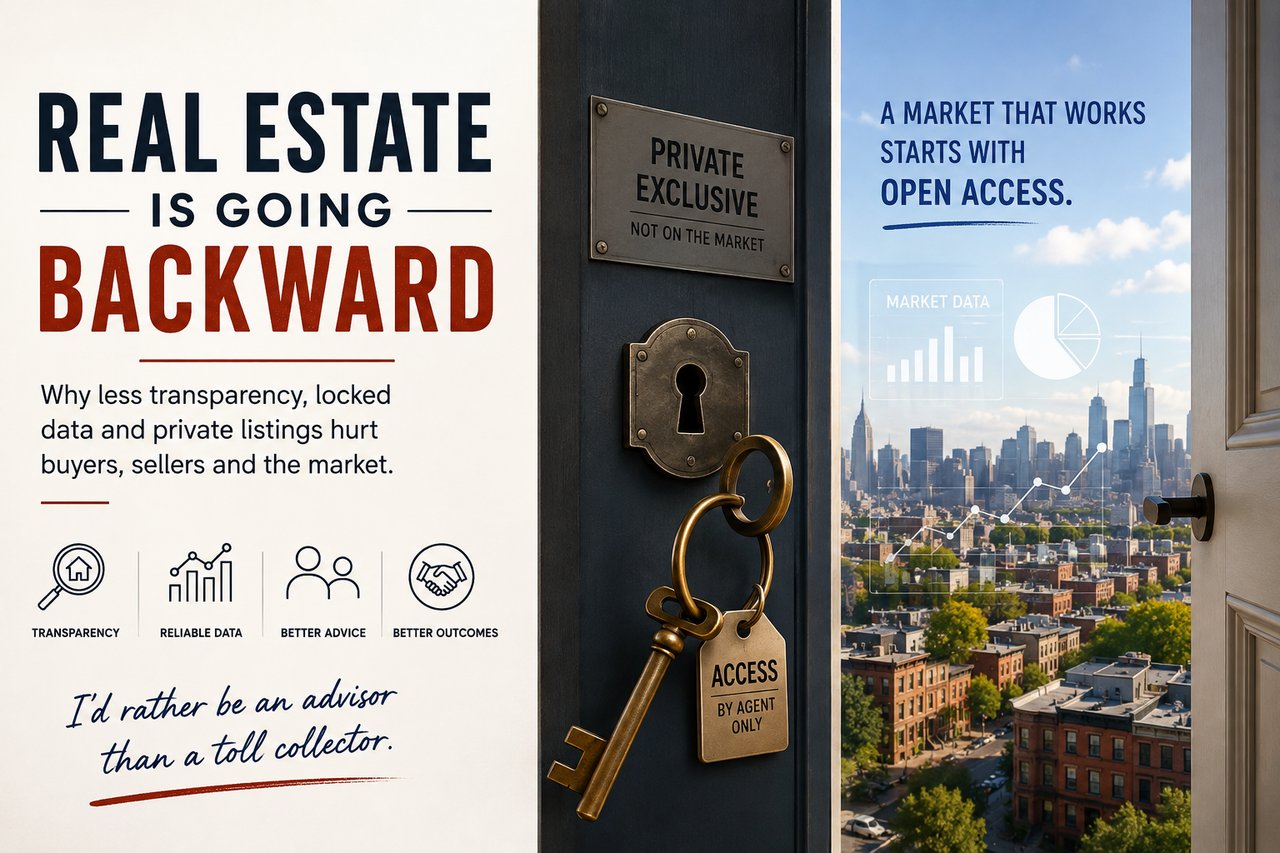
The sick joke is that this actually helps brokers like me in some ways. The more hidden the market becomes, the more valuable it is to be plugged in. If all the inventory is scattered in private channels, then consumers need someone like me even more just to know what exists. It gives connected brokers more control. More leverage. More information. More power.
And if I were only in this for the money, I would probably shut up and enjoy that.
But this business is supposed to be a service business. Buyers and sellers are supposed to get better information, wider exposure, and a fairer process, not less of all three because a handful of firms and investors decided that hoarding inventory is a smarter business model. A lot of brokers know this is bad for the market. They also know consolidation has made the industry more political and more fragile. Fewer firms control more of the business, and many people are too afraid to say anything because they do not want to get frozen out. So the CEOs keep filling their pockets, the firms keep building walls, and the market gets less transparent by the day.
That is not progress. That is regression.
If you are a seller, ask one simple question before agreeing to any “private” strategy: who does this really benefit? Me, or the brokerage? Ask exactly where your home will be seen, by whom, for how long, and what you are giving up by limiting exposure. If you are a buyer, work with a broker who will tell you the truth about how fragmented the market has become and who has the reach to uncover everything, not just what is convenient. And if you care about the health of the market overall, speak up. Support open listing distribution, transparency, and policies that put consumers before brokerage profit. The industry got better when information was shared. It will get worse again if we let secrecy become the business model.