Every few years, somebody dusts off an old bad idea, slaps a fresh headline on it, and pretends it’s a new solution.
Right now that shiny old bad idea is SROs.
If you’re reading the latest think piece talking about how single-room occupancy units are going to “save” the housing crisis, give people “dignified micro-homes,” and all the usual buzzwords, let me be the old guy at the edge of the campfire who’s already seen this movie.
Because I’ve been inside these buildings. I’ve sold them. I’ve walked the hallways. I’ve smelled the stairwells. And I can tell you: the theory of SROs and the reality of SROs are two very different worlds.
In theory, SROs could have been great
In theory, I actually like the core idea.
Short-term, affordable housing for regular people who are going through a tough stretch? Absolutely. That’s needed.
People going through a divorce who need a place for a few months while the lawyers battle it out.
People whose apartments are being repaired or renovated and need a place to land in the meantime.
People with a temporary financial hit who just need a few months to stabilize so they don’t fall off a cliff.
SROs could have been perfect for that. A bridge. A pressure release valve. A way to give people a place to sleep and shower and lock their door while they rebuild the rest of their life.
That’s the fantasy version everyone loves to write about.
Now let me tell you about the version I actually see on the ground.
What they turn into in the real world
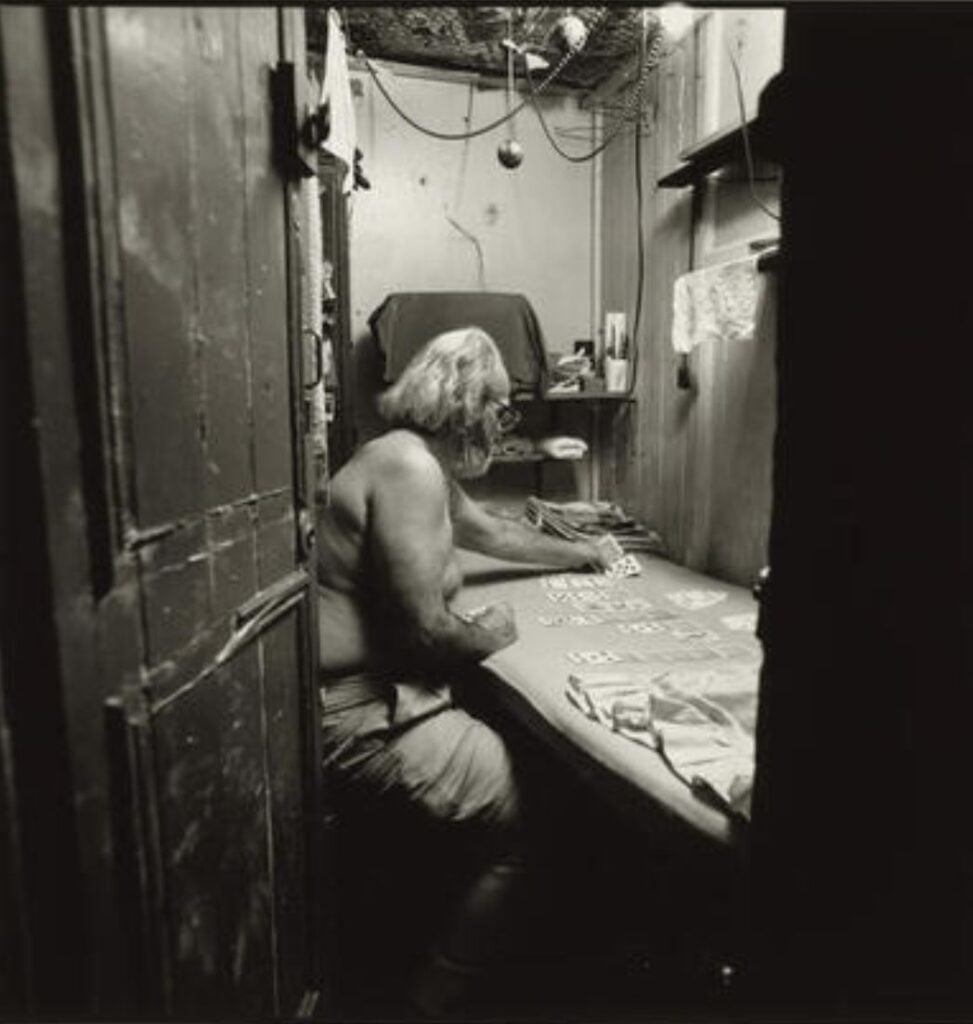
Here’s the problem: in practice, SROs don’t become quiet, orderly little way-stations for hardworking people in temporary trouble.
They turn into homeless shelters you don’t call shelters.
They turn into drug dens.
They turn into buildings where the only thing “short-term” is how long the neighbors can stand living near them.
I’ve sold quite a few SRO buildings in New York City. I don’t say this lightly: I have not once gone through one and found it primarily occupied by the people everyone claims to be helping in these articles.
Over and over, it’s the same pattern:
Rooms being used for prostitution.
Rooms being used for dealing and using drugs.
Rooms chopped up and illegally sublet to whoever will hand over cash, no questions asked.
And before someone jumps in with “that’s just one bad building,” let me share one example in a bit more detail, and then understand this: it’s not the exception. It’s the pattern.
The 112-unit building I will never forget
I sold a 112-unit SRO in Brooklyn. That building is burned into my memory.
At one point, to get a handle on what was going on, I set up cameras. What we saw was so predictable it was almost mechanical. Multiple women rotating in shifts. Men coming and going almost on the hour. It was a factory. Not a home. Not “housing.” A factory for prostitution.
Four other units in the building weren’t even being used as “rooms” anymore. They were illegally subleased out as mini businesses or storage. Everybody had a hustle going, none of it legal, none of it safe.
Then there was the chicken coop.
One unit was rented to a guy paying $283 a month. When I opened the door, there were about 50 chickens living in there. Fifty. Inside a Brooklyn SRO unit.
The smell of ammonia hit me so hard my eyes burned. Not because I think chickens are disgusting. Chickens are fine. But fifty of them in a tiny room, with no ventilation, in a residential building, is not housing. It’s a horror show.
And if that wasn’t enough, walking through the building one day, I opened a door and found a tenant who had died several days earlier. No one had checked. No one had noticed. No one in the building had the responsibility, the oversight, or frankly the ability to make sure something like that didn’t happen.
That was the first time I ever saw a dead person outside of a wake or funeral. In that moment, all the pretty language about “micro-housing” and “innovative solutions” felt like a bad joke.
The problem nobody writing the pro-SRO articles wants to talk about
Everyone writing glowing pieces about SROs loves big concepts: “inclusion,” “affordability,” “dignity,” “reimagining space.”
Let me tell you what they never talk about: oversight.
These buildings are almost always non-doorman, barely managed by an overworked super who already has too much on their plate. The rents are so low the owner doesn’t have any economic incentive to put in real management or even basic security beyond whatever the law forces them to do.
So what happens?
Nobody is really watching who’s moving in.
Nobody is really watching what they’re doing day to day.
Nobody is really in a position to intervene when the building starts sliding.
And when the owner finally figures out a unit is being used for prostitution, for dealing, for whatever nefarious purpose you can think of, what can they actually do?
Almost nothing. Because SRO tenants are one of the most protected classes in New York real estate. On paper, the laws were written to protect vulnerable people from displacement. In reality, those same protections, combined with no oversight, create fertile ground for exactly the kind of abuse and chaos nobody wants in their neighborhood.
It’s like we handed out invincibility cloaks, then acted shocked when some people used them for the wrong reasons.
History already showed us this doesn’t work
None of this is new. We’ve done versions of this before.
This is Robert Moses all over again: taking people who are already in hard situations and cramming them together into undesirable setups, out of sight from the people who don’t want to look at poverty head-on.
We build a thing that “solves the problem” on paper, but all we really do is shove the problem into a brick box and pretend we fixed something.
Except that box doesn’t stay invisible. It becomes a pressure cooker. You push enough people dealing with addiction, trauma, mental illness, financial collapse, and crime into the same unmanaged building with no real support, no structure, and no way to keep the worst behavior in check, and guess what?
That pressure cooker doesn’t just sit there quietly. It explodes. And when it does, it spills right back into the streets and the neighborhoods and the city that tried so hard to hide it.
Then ten, twenty years later, some new politician or planner stands up and says, “We have to undo the damage of what was done back then,” as if this wasn’t predictable from day one.
We’re not learning anything. We are literally rebuilding the same mistakes with nicer graphic design and better hashtags.
This isn’t compassion. It’s lazy policy.
Here’s what really bothers me about this new wave of SRO cheerleading.
It’s being sold as compassion. As if anyone criticizing it must be some heartless landlord lover who doesn’t care about poor or struggling people.
That’s nonsense.
I believe in a living wage.
I believe in actual economic solutions for housing for every class.
I believe we absolutely need to support people who are less fortunate, who are getting slammed by this city’s cost of living, who are trying to get back on their feet.
But that’s exactly why I’m against this.
Because what’s being pushed now isn’t a real solution. It’s a zoning trick dressed up as compassion. It’s politicians manipulating housing rules to quiet down some enraged landlords who got hammered by the July 1, 2019 rent laws.
“Look, we screwed you with one set of laws, but here, we’ll throw you this SRO bone. Convert your building, carve it up, get some guaranteed money, we’ll call it ‘innovative housing.’ Everyone wins.”
Except everyone doesn’t win.
Some landlords will take the deal because they’re bleeding and they need relief.
Politicians will get to say they “created units” and “tackled the housing crisis.”
And the people actually living in and around these buildings will pay the price.
The city ends up saddled with a new batch of poorly supervised, legally frozen, socially volatile buildings that are almost impossible to police, stabilize, or unwind once the problems show up.
We will look back ten, fifteen years from now and pretend we’re surprised. We shouldn’t be.
What we should be building instead
If you’re still with me around this metaphorical campfire, here’s where I want to be clear: I’m not arguing we do nothing.
We need short-term, safe, dignified housing.
We need options for people going through divorce, renovation, temporary financial disaster.
We need real structures for people dealing with addiction and mental health issues, with services and oversight built in, not just a mailbox and a lease.
But what we absolutely do not need is to repeat the same pattern of stuffing the hardest human problems into the cheapest possible box and slapping the word “solution” on the side.
If you’re going to create dense, small-unit housing for people in crisis, you need:
Real management.
Real on-site supervision.
Real support services.
And real, practical ways to remove people who turn those buildings into hubs for crime.
Without that, SROs are not housing. They’re containment. And containment without support just makes everything worse.
Final warning from someone who’s actually walked the halls
It’s easy to sit behind a laptop and fall in love with the idea of SROs. The renderings always look clean. The language is always aspirational. The quotes are always about “dignity” and “possibility.”
But I’m telling you as someone who has actually sold these buildings, walked their stairwells, opened their doors, and seen what happens when nobody is really in charge:
If you bring SROs back the way they’re being talked about now, history is going to repeat itself.
We will get the same crime, the same neglect, the same human misery concentrated in the same kinds of buildings.
We will pretend we didn’t see it coming, even though it’s all written in our own recent past.
We need better answers than this. We owe people better than this. We owe the city better than this.
And if the only people telling you SROs are a brilliant idea are politicians, planners, and writers who have never had to chase down a super to open a door on the fourth floor and find what I’ve found in these places, maybe, just maybe, it’s time to listen to the old guy at the campfire who has.