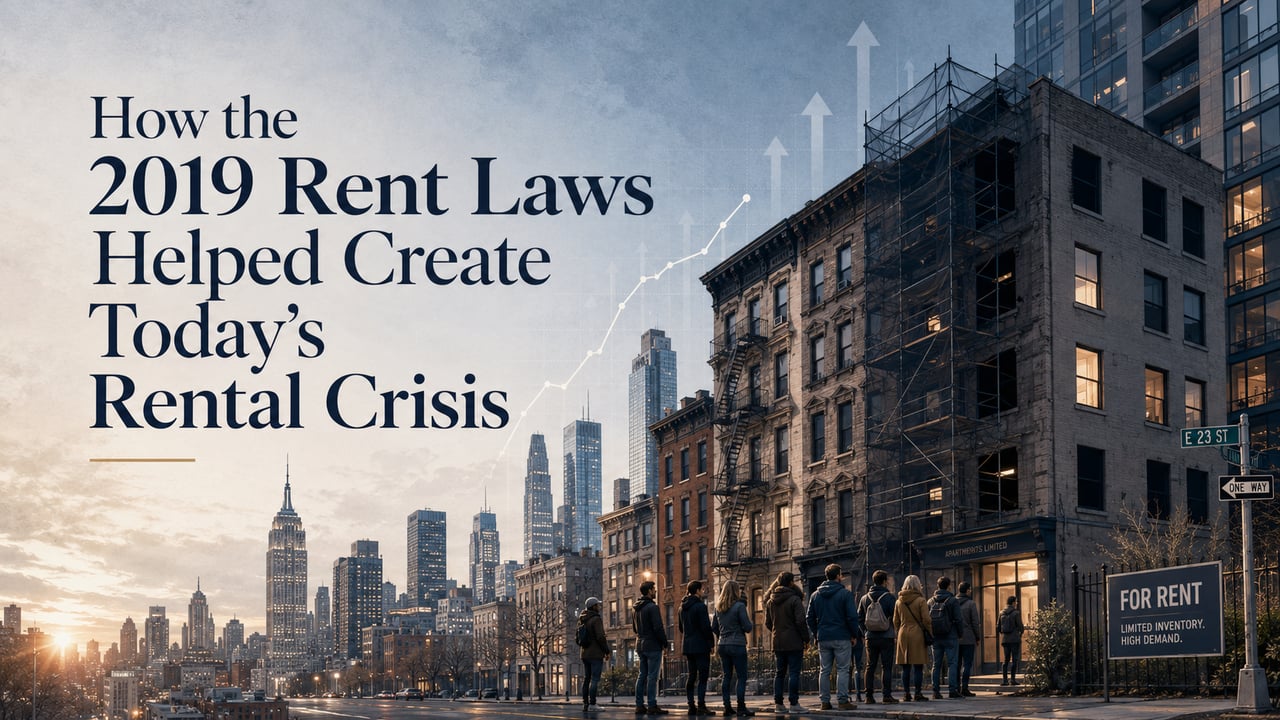
In June 2019, New York State passed the Housing Stability and Tenant Protection Act, dramatically changing the rules governing rent-stabilized apartments. The law was intended to protect tenants and prevent displacement. While it helped many existing tenants remain in their homes, it also created unintended consequences that have made the rental market more expensive and difficult for anyone searching for an apartment today.
Before 2019, owners had stronger financial incentives to renovate vacant rent-stabilized apartments. They could recover part of the renovation costs through rent increases, and certain apartments could eventually leave regulation. The new law eliminated vacancy bonuses and high-rent deregulation, limited how much owners could recover for improvements and made preferential rents permanent during a tenancy.
The intention was understandable: prevent owners from using renovations to justify unreasonable increases. The problem is that many older apartments require major work before they can be rented again. After decades of occupancy, an apartment may need a new kitchen, bathroom, plumbing, electrical systems, flooring and other repairs. In New York City, that work can easily cost more than $100,000.
When the legal rent is too low to justify that expense, some owners delay the renovation or leave the apartment vacant. That removes housing from the market at the exact time the city desperately needs more supply.
The law also made investors and lenders less willing to finance rent-stabilized buildings. Rental income became more restricted while property taxes, insurance, labor, utilities and construction costs continued to rise. This made many buildings harder to maintain, renovate and finance.
Because rent-stabilized apartments represent such a large portion of New York City’s housing stock, the effects spread throughout the entire rental market. When regulated apartments are unavailable, under-renovated or occupied for longer periods, more renters are pushed into the smaller market-rate inventory.
The result is what tenants are experiencing today: multiple applications, bidding wars, strict financial requirements, little negotiating power and apartments disappearing almost immediately. New York City’s rental vacancy rate recently fell to approximately 1.4%, the lowest level in decades.
The 2019 law is not the only cause of today’s high rents. New York has also failed to build enough housing, while interest rates, property taxes and construction costs have increased significantly. COVID further disrupted the market. However, the 2019 legislation intensified the shortage by discouraging renovations and making it harder to return certain apartments to active use.
The central mistake was trying to create affordability through price controls without doing enough to increase supply. Protecting an existing tenant does not create another apartment for the person trying to move, relocate for work or find a larger home.
New York needs strong tenant protections, but it also needs policies that allow responsible owners to renovate apartments, maintain buildings and earn a reasonable return. Until the city and state address both sides of the equation, renters will continue facing fewer choices, more competition and higher prices.